Posts

HYBRID TESTING - H2kinfosys

Image
We all know about the  integration testing  in that we test the standalone modules which are combined and tested as a single entity. There are two popular types of integration testing one is top down approach another one is bottom up approach. In hybrid testing we use the advantages of top down and bottom up approaches and the test is done by using both techniques. This is also known as sandwich testing. hybrid testing The features of Hybrid testing are: It has three layers namely: The main target layer, the layer above the target layer and the layer below the target layer. The testing is focused on the middle level target layer and is selected based on the characteristics of the structure of the code Hybrid testing is adopted if the user wants to work on the working version of the application as soon as possible determine to produce the basic working system in the earlier stages of the development cycle. The main objective of hybrid approach is to create the proc...

RISK BASED TESTING - H2kinfosys

Image
Risk based testing is performed based on the identification of risks involved in the project. Risk is the possibility of failure in the projects. Risk is the occurrence of the uncertain events with the positive or negative effect. This uncertain effect could have impact on business, cost, technical and  quality  targets of the projects. Risks can be either positive or negative. They are explained as below. Positive:  It is the opportunity and help in business sustainability. For example investing in new projects, changing business processes etc. Negative:  these are the threats which recommend to be eliminated for the success of the project. Risks can also be broadly classified as: Project risk Product risk Project risk:  The project risk can be the problems other than those in the software. For example: incomplete or incorrect requirements, inaccurate estimates of resources, staff issues, inadequate skills of project team, business issues, pol...

USABILITY TESTING BY H2KINFOSYS

Image
Usability testing  is also called as user experience  testing . This testing mainly focuses on the user’s convenience and flexibility in using the controls and capacity of the system to meet the required objectives. It is performed by a small group of targeted end users who use the software to expose the usability defects of software system. Usability testing determines whether the application is user friendly. USABILITY TESTING Since the software applications are being used on various devices of the different configurations, the software should be easily usable creating an experience to users. The software is expected to be effective, easy to use, engaging, interactive, simple to use by different type of users of relevant age groups, intellect, etc. During the plan and design phase itself the usability characteristic of the software is to be implemented and tested. The aspects like who are the end users of software, what are the devices on which the software will be u...

RISK BASED TESTING BY H2KINFOSYS

Image
Risk based testing is performed based on the identification of risks involved in the project. Risk is the possibility of failure in the projects. Risk is the occurrence of the uncertain events with the positive or negative effect. This uncertain effect could have impact on business, cost, technical and  quality  targets of the projects. Risks can be either positive or negative. They are explained as below. Positive:  It is the opportunity and help in business sustainability. For example investing in new projects, changing business processes etc. Negative:  these are the threats which recommend to be eliminated for the success of the project. Risks can also be broadly classified as: Project risk Product risk Project risk:  The project risk can be the problems other than those in the software. For example: incomplete or incorrect requirements, inaccurate estimates of resources, staff issues, inadequate skills of project team, business issues, pol...

Manual testing VS Automation testing and the benefits of QTP? by H2kinfosys

Image
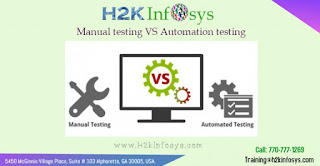
What is Manual testing? Manual testing  is the oldest and most rigorous testing method.  Manual testing  requires a tester to perform manual test operations to find defects in a software or application. The tester ensures that’s the software meets its requirements by writing, understanding and executing  test plans  and  test cases . Pros If the test case only runs twice a coding milestone, it most likely should be a manual test. Less cost than automating It allows the tester to perform more  ad-hoc (random testing).  In my experiences, more bugs are found via ad-hoc than via automation. The more time a tester spends playing with the feature, the greater the odds of finding real user bugs. Cons Running tests manually can be very time consuming Each time there is a new build, the tester must rerun all required tests – which after a while would become very mundane and tiresome. What is Automation testing? Over the year...

What is HYBRID TESTING?

Image
We all know about the  integration testing  in that we test the standalone modules which are combined and tested as a single entity. There are two popular types of integration testing one is top down approach another one is bottom up approach. In hybrid testing we use the advantages of top down and bottom up approaches and the test is done by using both techniques. This is also known as sandwich testing. hybrid testing The features of Hybrid testing are: It has three layers namely: The main target layer, the layer above the target layer and the layer below the target layer. The testing is focused on the middle level target layer and is selected based on the characteristics of the structure of the code Hybrid testing is adopted if the user wants to work on the working version of the application as soon as possible determine to produce the basic working system in the earlier stages of the development cycle. The main objective of hybrid approach is to create the proc...
What is SOAK TESTING?

Image
Soak testing is a type of  performance testing  which tests the system’s performance characteristics and stability over a long period of time, ie. under continuous usage of the software. It handles issues related to memory allocation, log files and database resource utilisation. It is a system level of testing to find whether the system will stand up to very large volume of data usage over longer period of time and observing the  effect caused to the design. Characteristics of soak testing: The soak testing characteristics are The duration of soak test is determined by the time available. Any application should run without any disturbance if it requires over a longer period. It should cover all the situations which are agreed upon with stake holders. All system has its maintenance window period of time and the time between those window periods is the key driver for determining the scope of soak test. For example in an mobile applications playing video ...